

Fuel additives
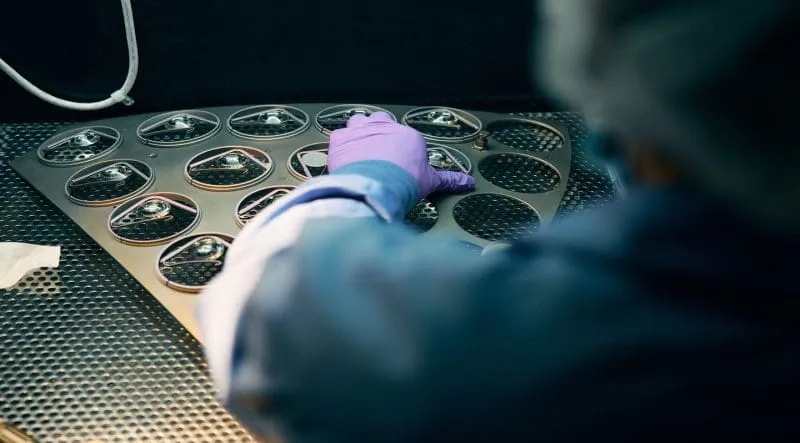

Hexite™ boosts lubricity and reduces friction when blended as a concentrate fuel additive for gasoline, diesel or jet fuel — improving fuel efficiency and reducing carbon emissions.
Where performance creates advantage
Fuel additives play a critical role in improving efficiency and reducing emissions across automotive, aerospace, marine and industrial applications. When blended as a concentrate and integrated as a fuel additive for gasoline, diesel or jet fuel, Hexite™ boosts lubricity and reduces friction — improving fuel efficiency and significantly reducing emissions.

Improved engine efficiency

Reduced carbon emissions

Extended equipment life

Fuel efficiency improvement
How we work
Hexite™ is engineered into thermoplastics through a controlled, repeatable process — from proprietary nanomaterial chemistry to precision dosing in the masterbatch.
Hexegen’s proprietary blend of hydrocarbon gases and chemistry creates a unique, pure carbon nanomaterial structure. Hexite™ particles feature multiple stacked single layers of carbon, giving them the properties that power our customers’ additives, products and solutions.
Hexite™ is blended as a concentrate into gasoline, diesel or jet fuel, dispersing evenly throughout the fuel.
Precise dosing lets fuel producers tune lubricity, friction reduction and efficiency improvements to their specific fuel blend and application.
The Hexegen difference
Without Hexite
Standard fuels offer limited lubricity, leading to higher friction, greater engine wear and higher carbon emissions.
Stronger
With Hexite
Hexite™ boosts lubricity and reduces friction, improving fuel efficiency, cutting carbon emissions and extending equipment life, even in harsh conditions.
Application environments
Hexite™ delivers measurable performance gains across ready mix, precast, shotcrete and wellbore cementing applications.
Improved fuel efficiency and reduced maintenance for industrial engines and generators.
Reduced friction, improved fuel efficiency and extended equipment life in marine fuel systems.
Improved lubricity and reduced friction in jet fuel applications.
Improved fuel efficiency and reduced emissions for gasoline and diesel engines.

Understand more about Hexite™
See how Hexite™ works and why it outperforms conventional materials across the metrics that matter.
Explore other applications







Let’s create your competitive edge
Tell us your challenge and our team will help you find the material advantage that sets you apart.